
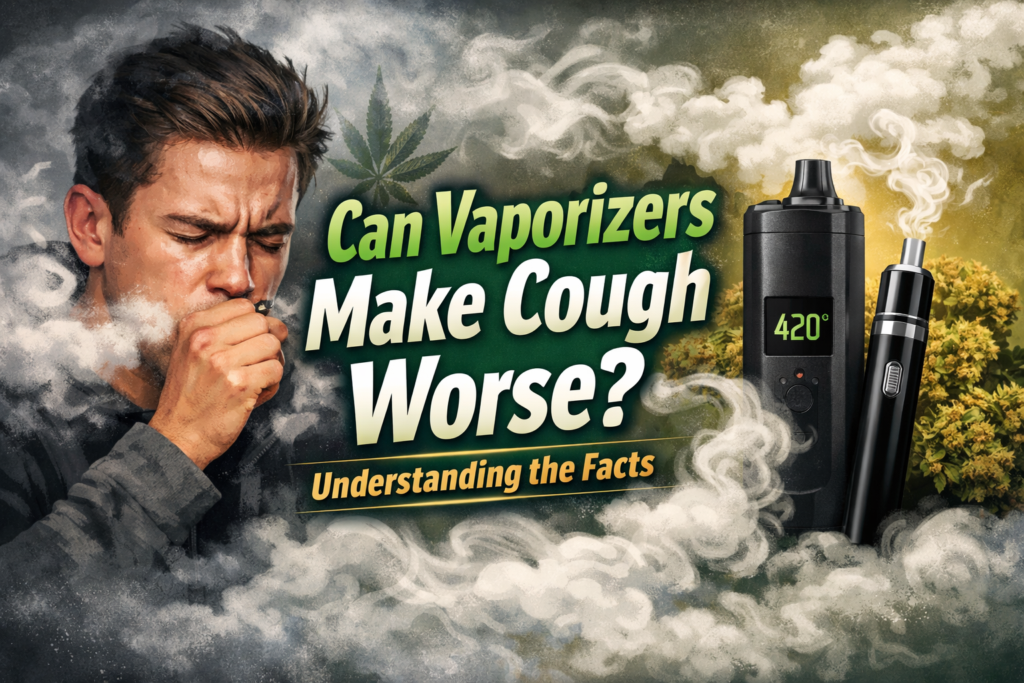
Many people who start using vaporizers ask an important question: can vaporizers make cough worse? While vaporizers are often marketed as a smoother and healthier alternative to smoking, some users still experience throat irritation, coughing, or respiratory discomfort.
In this detailed guide, we explore the factors that can influence coughing when using vaporizers, the role of temperature and materials, and tips for preventing or reducing irritation.
How Vaporizers Work and Their Effect on the Throat
Vaporizers work by heating materials—like dry herbs, oils, or concentrates—at temperatures that release active compounds as vapor, without burning the substance.
- Because there is no combustion, vapor is generally smoother than smoke
- Fewer harmful byproducts like tar or carbon monoxide are produced
- Users inhale a cleaner form of the active compounds
However, even vapor can irritate the throat or lungs if used improperly.
Factors That Can Make Cough Worse
1. High Temperature Settings
One of the most common causes of coughing from vaporizers is high temperature.
- High heat can create denser vapor that is harsher on the throat
- Rapid inhalation of hot vapor can trigger coughing
- Burning or near-burning temperatures may release minor irritants
Solution: Start at lower temperatures and gradually increase.
2. Dry or Improperly Prepared Materials
Dry herbs or concentrates that are too dry can increase throat irritation:
- Overly dry plant material produces hotter, harsher vapor
- Poorly stored materials may irritate the throat or trigger coughing
Tip: Use properly cured herbs and store materials in airtight containers.
3. Device Quality and Maintenance
Low-quality or dirty vaporizers may worsen coughing:
- Residue buildup in chambers or mouthpieces can irritate the throat
- Inconsistent heating may produce uneven vapor
- Low-quality devices may release unwanted chemicals
Recommendation: Regularly clean your vaporizer and choose a reputable model.
4. Inhalation Technique
How you inhale can impact coughing:
- Taking rapid, deep puffs can strain the lungs
- Slow, steady inhalation produces smoother vapor
- Pausing slightly between draws reduces throat irritation
As a result, technique is just as important as device or material.
5. Preexisting Respiratory Conditions
Users with asthma, chronic bronchitis, or other lung sensitivities may experience:
- Increased coughing
- Throat irritation
- Shortness of breath
Caution: People with respiratory conditions should start at lower temperatures and consult a healthcare professional if irritation persists.
Comparing Vaporizers and Smoking for Cough
| Method | Throat Irritation | Cough Risk | Lung Exposure |
|---|---|---|---|
| Smoking | High | High | Smoke + tar |
| Vaping | Lower | Moderate | Cleaner vapor |
Observation: Vaporizers usually reduce coughing compared to smoking, but improper use can still trigger discomfort.
Tips to Prevent or Reduce Coughing
- Start low: Begin with lower temperatures
- Hydrate: Drink water before and after inhaling
- Clean regularly: Remove residue and buildup
- Grind evenly: Consistent herb size improves vaporization
- Pace yourself: Take slow, steady inhalations
- Check humidity: Extremely dry herbs can be moistened slightly with proper storage
Additionally, experimenting with temperature and inhalation speed often helps find the perfect balance.
When Vaporizers Might Make Cough Worse
Despite proper use, some situations may still worsen coughing:
- Using cheap or malfunctioning vaporizers
- Inhaling very dense vapor in a single puff
- Preexisting lung conditions that react to any vapor
Key point: Most coughs are avoidable with good technique, proper materials, and suitable devices.
Benefits of Vaporizers Despite Cough Risk
Even if some users experience mild coughing:
- Vaporizers still reduce exposure to harmful smoke byproducts
- Smooth vapor preserves flavor and potency
- Temperature control allows customizable and safer sessions
Therefore, the occasional cough is usually a minor trade-off for cleaner inhalation.
Are There Users Who Never Cough With Vaporizers?
Yes, many users experience little to no coughing if:
- They maintain the device well
- Use the right temperature
- Follow proper inhalation technique
This demonstrates that coughing is often related to usage rather than the vapor itself.
Final Verdict: Can Vaporizers Make Cough Worse?
So, can vaporizers make cough worse?
- Yes, under certain conditions: high temperature, dry materials, poor technique, or respiratory sensitivities
- But generally, vaporizers reduce coughing compared to smoking
- Proper use, device maintenance, and technique usually prevent or minimize irritation
In conclusion, vaporizers are a safer and smoother alternative, but mindful usage is key to avoiding coughing.